1. Product Brief Introduction
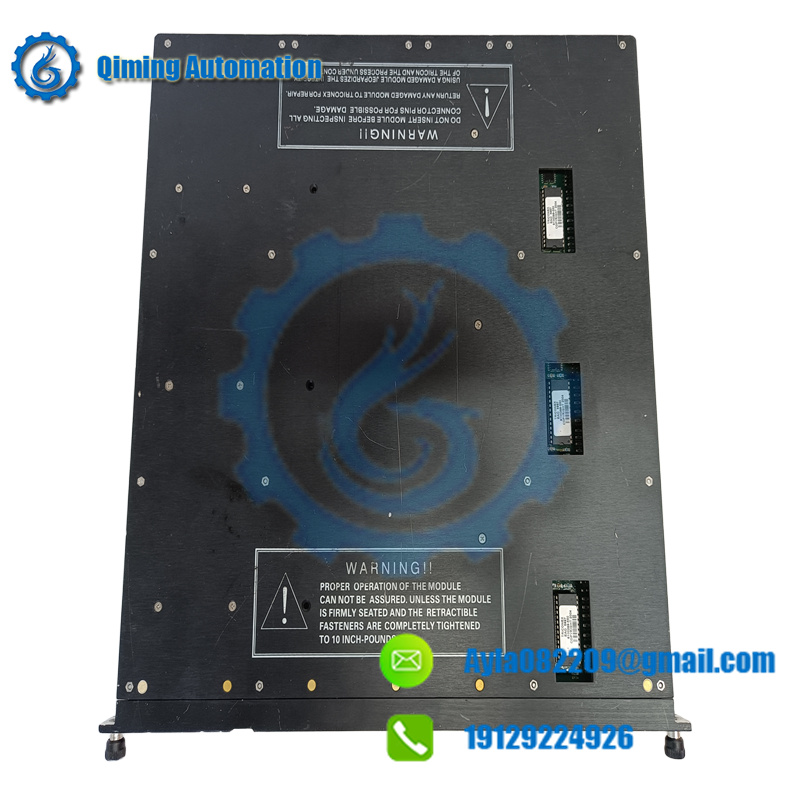
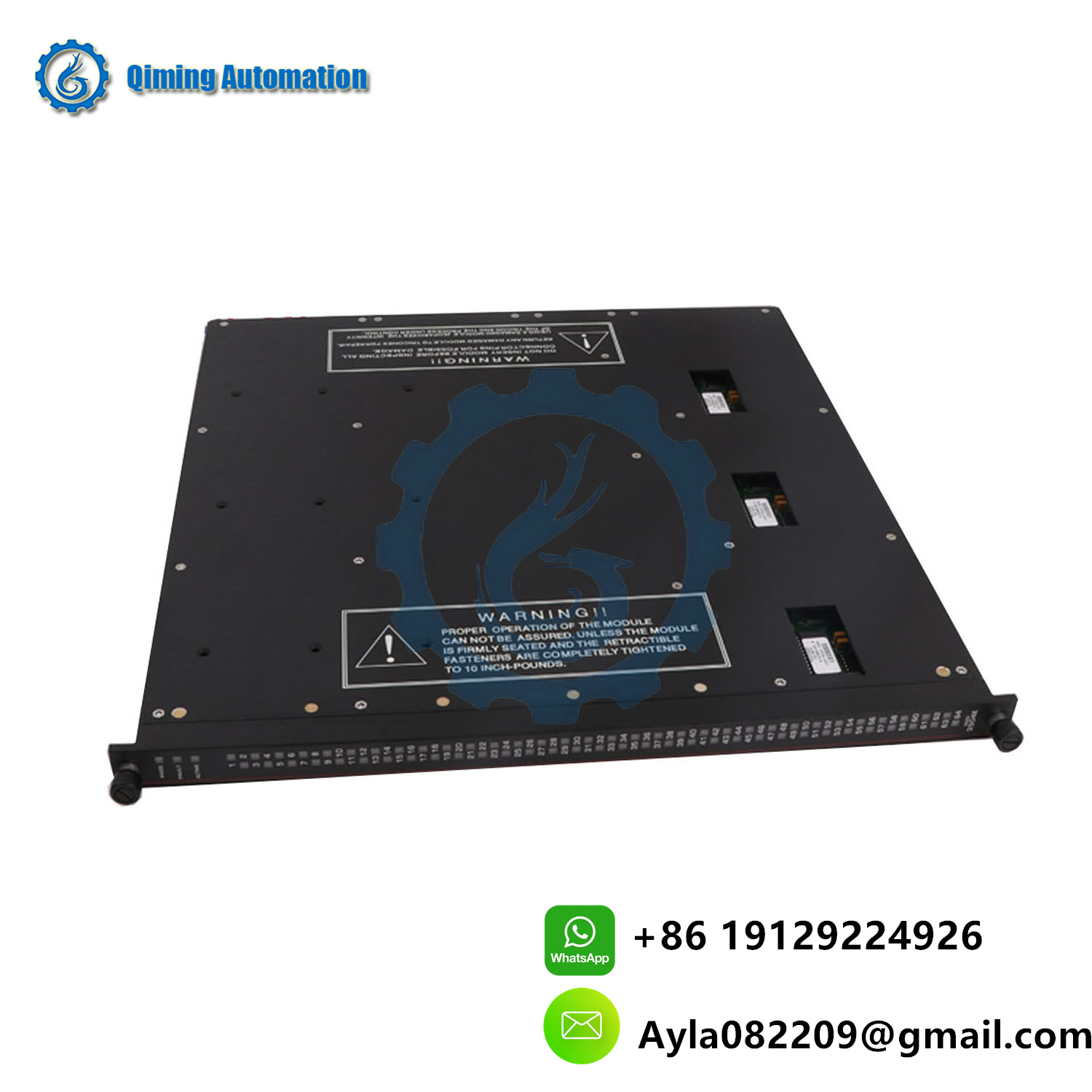
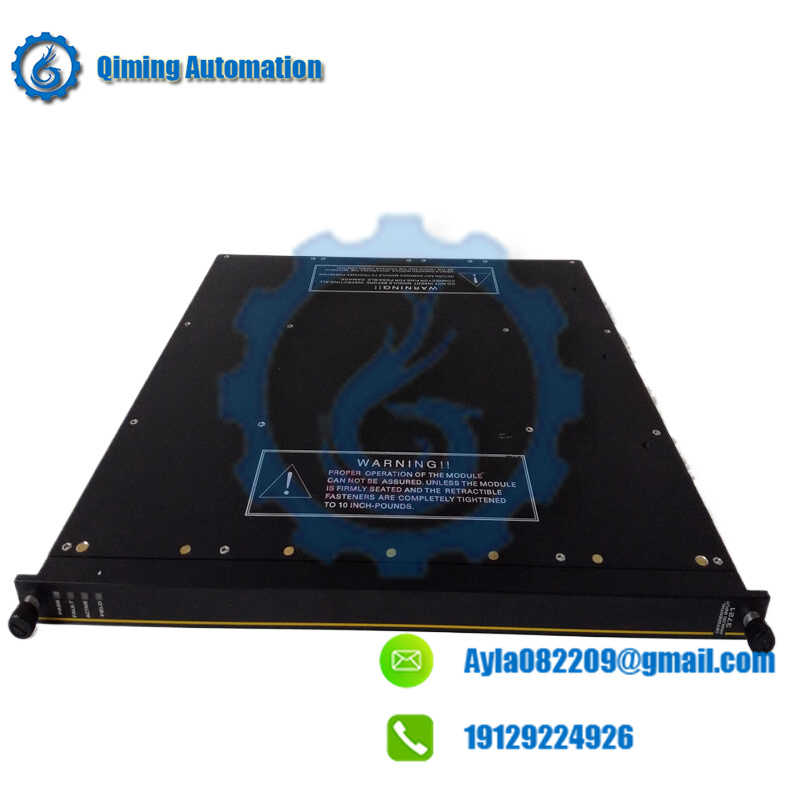
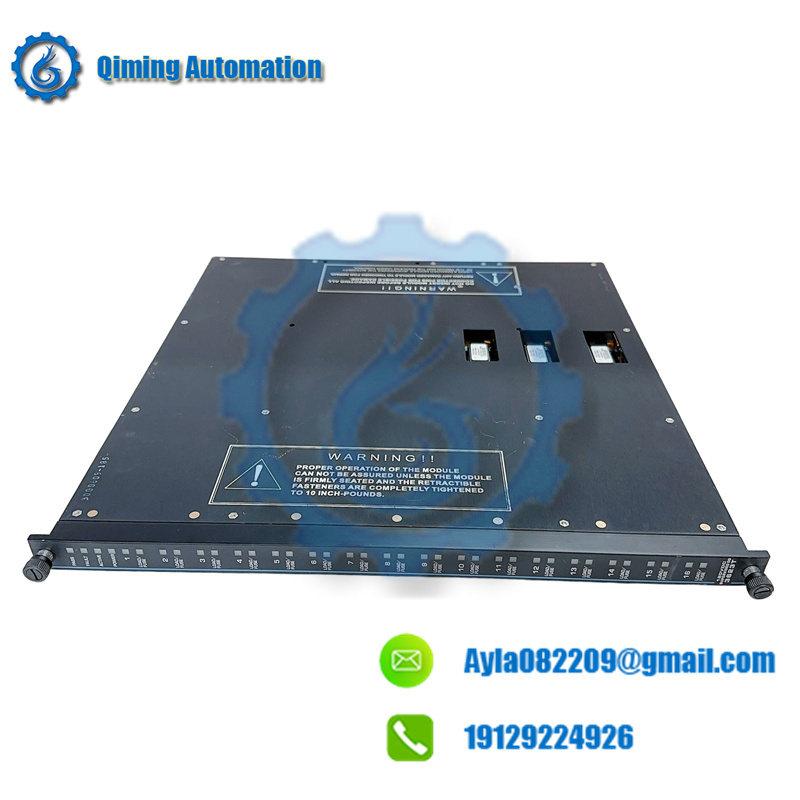
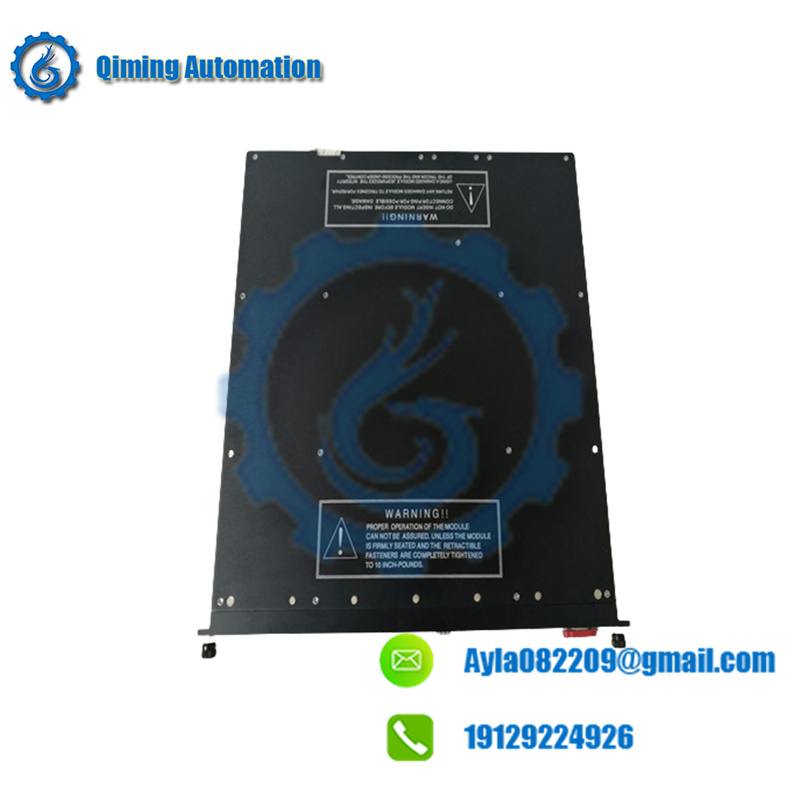
The TRICONEX 3721 is a high-reliability Triple Modular Redundancy (TMR) analog input module developed by TRICONEX, now part of Schneider Electric. Exclusively designed for Tricon Safety Instrumented Systems (SIS), Emergency Shutdown Systems (ESD) and Fire & Gas (F&G) systems, it complies with the IEC 61508 SIL 3 safety standard. As a core component in industrial control, it is mainly used to collect analog signals (such as temperature, pressure and flow) from on-site sensors, convert them into digital signals for Triconex controllers to process, and provides stable and accurate signal acquisition support for safety-critical scenarios in petrochemical, oil & gas, power generation, pharmaceutical and other industries. Its TMR architecture ensures fault tolerance, allowing the system to operate normally even if two channels fail.
2. Technical Parameters
- Input Channels: 32 differential, DC-coupled analog input channels.
- Input Signal Range: Configurable between 0 to 5 VDC or -5 to +5 VDC; supports 0 to 20 mA current range with 250Ω shunt resistor.
- Resolution & Accuracy: Programmable 12-bit or 14-bit resolution; accuracy better than 0.15% of full scale (FSR) within 0°C to 60°C operating temperature range.
- Isolation: 800 VDC minimum field-to-system isolation; typical 420 kΩ channel-to-channel isolation.
- Environmental Adaptability: Operating temperature range of 0°C to 60°C; IP67 protection level, with dustproof, waterproof and anti-vibration capabilities.
- Power Consumption & Supply: Typical logic power consumption < 15 watts; supports 90-264 VAC input with redundant power design.
- Other Specifications: Input update rate of 10 ms; net weight of 1.2 kg; compatible with Tricon v10.2 and later systems.
3. Key Functions
- High-Precision Signal Acquisition: Equipped with high-performance ADC, it can accurately collect small signal variations, supporting diverse sensors such as pressure transmitters and strain gauges.
- TMR Fault Tolerance: Adopts Triple Modular Redundancy (TMR) architecture with three independent circuit channels, using 2oo3 (two-out-of-three) voting logic to eliminate fault data and ensure 99.999% system availability.
- Comprehensive Self-Diagnosis: Built-in real-time self-diagnostic mechanism, monitoring channel health, power integrity and communication status; triggers immediate alarms and displays status via front-panel LED indicators when abnormalities occur.
- Online Hot Swap: Supports on-line replacement without shutting down the controller, automatically recognized and resynchronized by the system to minimize production interruption.
- Flexible Configuration: Input range and resolution can be configured via Tristation 1131 software, no need for hardware reconfiguration, adapting to different on-site signal requirements.
4. Working Principle
The core working principle of the TRICONEX 3721 is to realize high-precision acquisition and reliable transmission of analog signals based on TMR architecture. First, the 32 differential input channels receive analog signals (voltage or current) from on-site sensors asynchronously. Then, the three independent internal circuit channels collect and process the same signal respectively, and transmit the data to the Tricon controller through the high-speed redundant TMR backplane bus. The controller uses an intelligent voting algorithm (taking the median value in TMR mode) to verify the three groups of data, eliminate fault data caused by single-channel failure, and ensure the accuracy of the output digital signal. Meanwhile, the built-in self-diagnostic mechanism continuously monitors the entire signal acquisition and transmission process; if abnormalities such as over-range input or channel failure are detected, it will immediately send an alarm signal to the upper management platform. The electrical isolation technology effectively blocks ground loop interference and fault diffusion, ensuring the stability and continuity of signal transmission in harsh industrial environments.