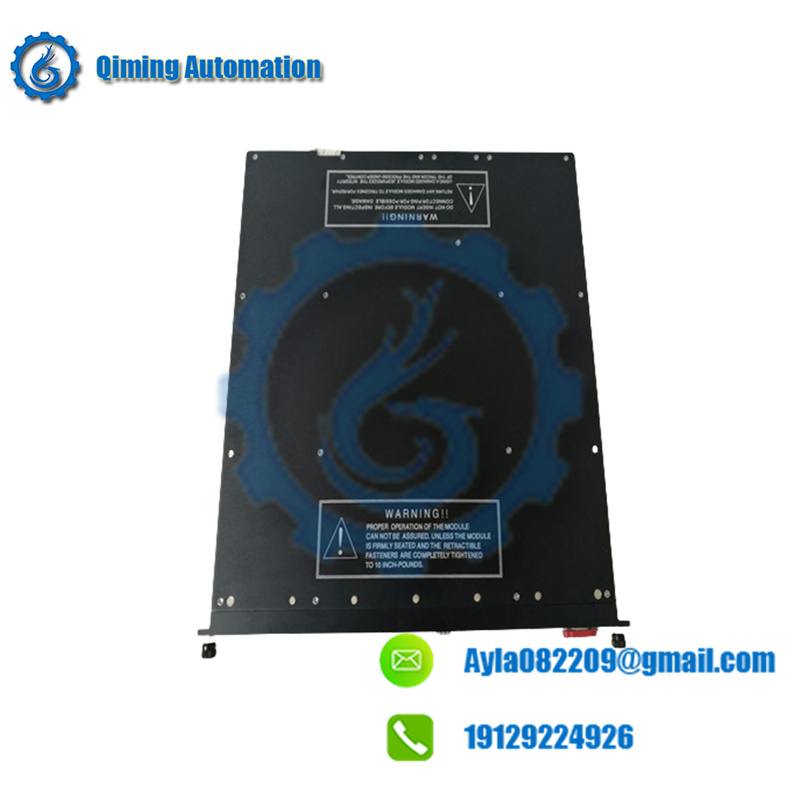
1. Product Brief Introduction
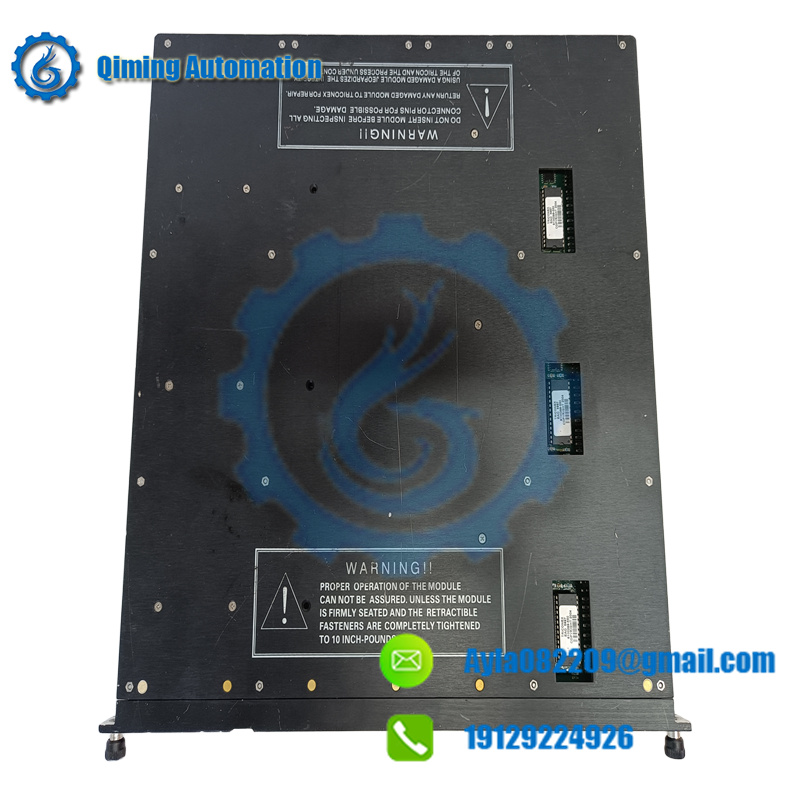
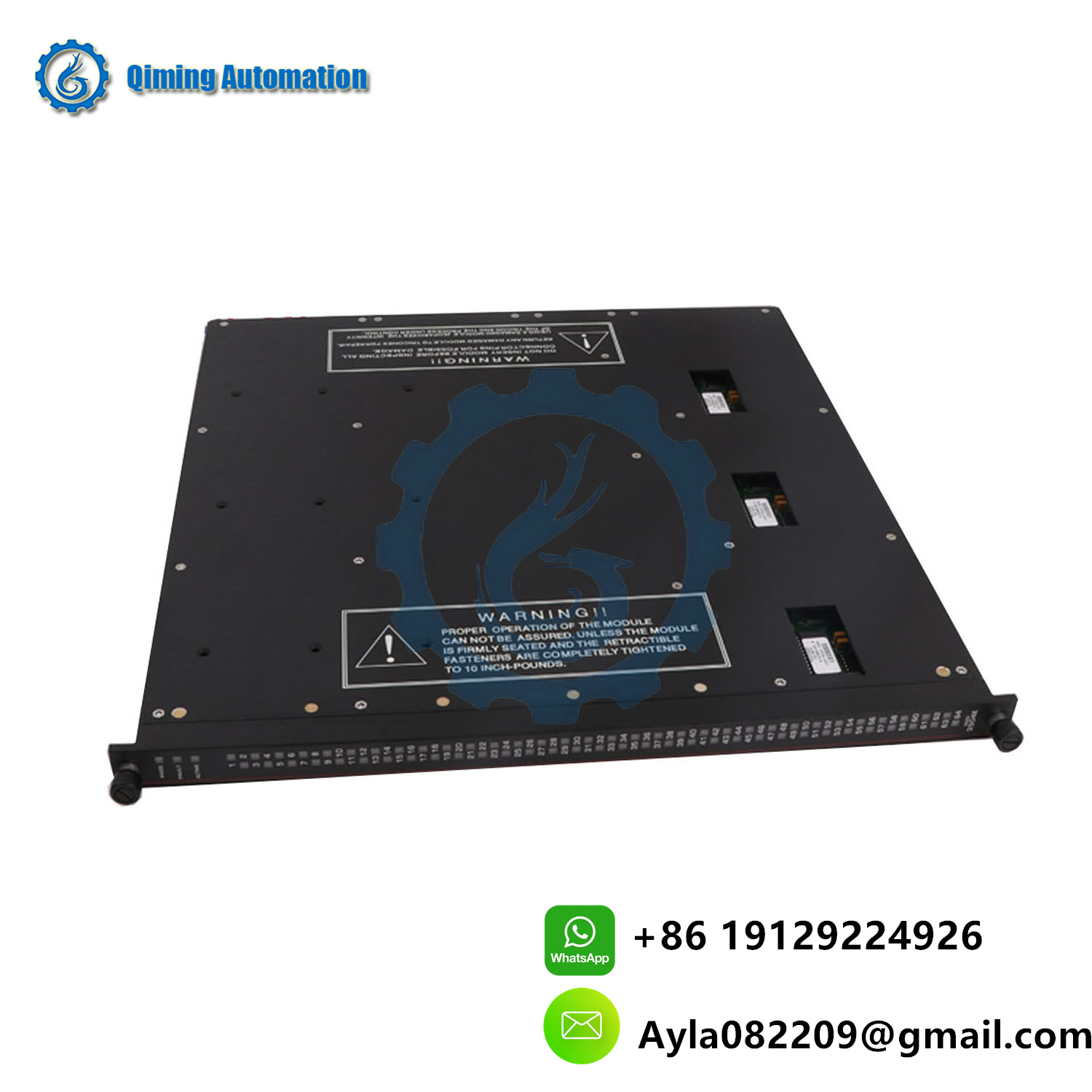
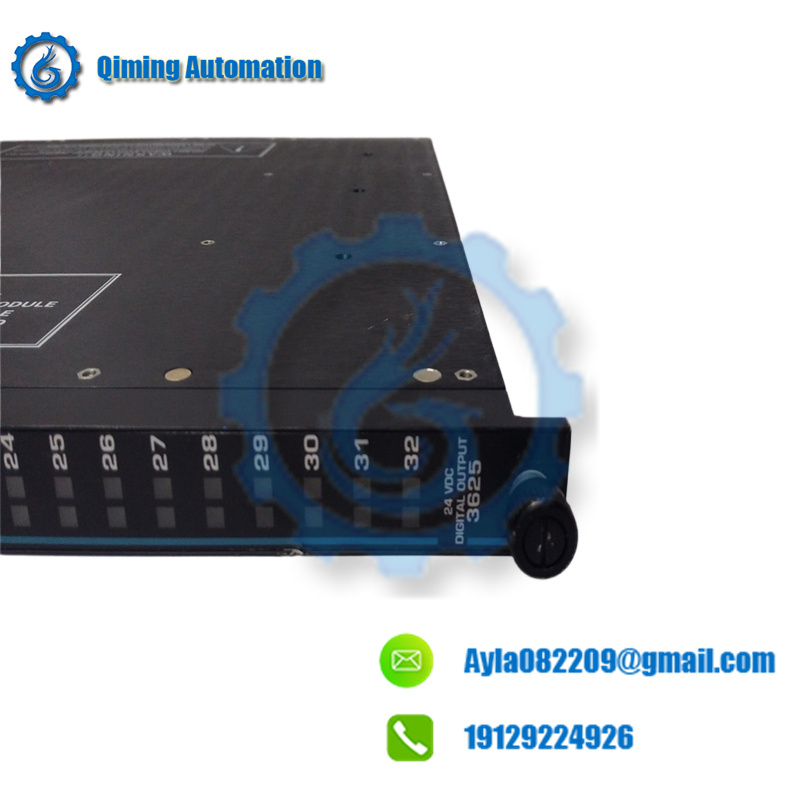
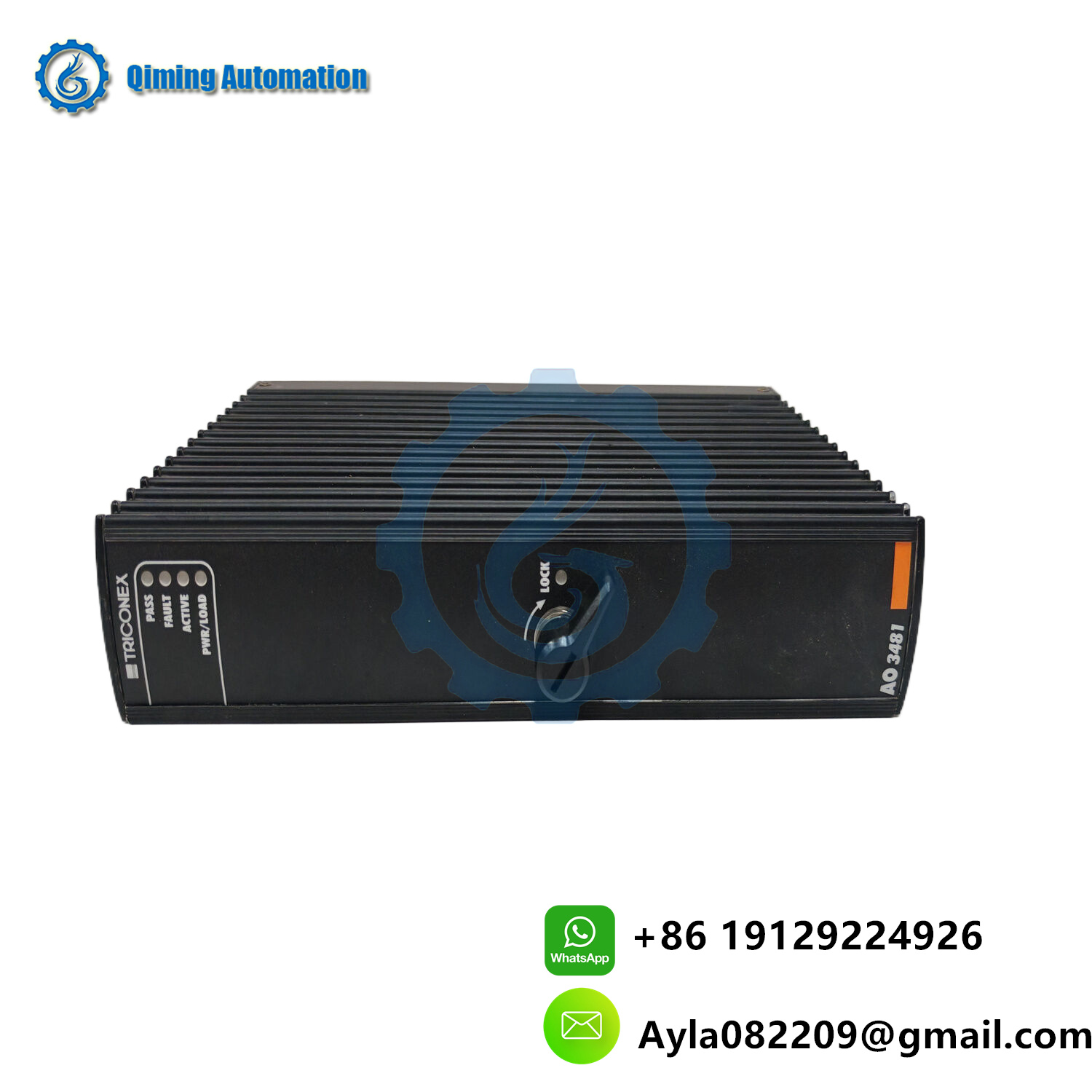
The TRICONEX AO3481 is a high-reliability Triple Modular Redundancy (TMR) analog output module developed by TRICONEX, now part of Schneider Electric. Specifically designed for Tricon Safety Instrumented Systems (SIS), Emergency Shutdown Systems (ESD) and critical industrial control systems, it complies with the IEC 61508 SIL 3 safety standard. As a core component in industrial control loops, it is mainly used to convert digital control signals from Triconex controllers into stable analog signals (voltage or current), which are then sent to on-site actuators (such as control valves, regulators and transmitters). It provides precise and reliable control signal output support for safety-critical scenarios in petrochemical, oil & gas, power generation, nuclear power and other harsh industrial environments. Its TMR architecture ensures excellent fault tolerance, enabling the system to maintain normal operation even if a single module channel fails.

2. Technical Parameters
- Output Channels: 4 to 8 configurable analog output channels (varies by configuration), supporting differential and single-ended output modes.
- Output Signal Range: Programmable, supporting 4-20 mA current signal and 0-10 VDC / ±10 VDC voltage signal; configurable per channel according to on-site needs.
- Resolution & Accuracy: 12-bit to 16-bit programmable resolution; accuracy better than ±0.25% of full scale (FSR) within the operating temperature range, ensuring high-precision signal output.
- Isolation: 800 VDC minimum field-to-system isolation; channel-to-channel isolation to prevent signal interference, ensuring signal stability.
- Environmental Adaptability: Operating temperature range of -40°C to 70°C; IP67 protection level, with dustproof, waterproof and anti-vibration capabilities, adapting to harsh industrial environments.
- Power Consumption & Supply: Typical logic power consumption < 12 watts; supports 90-264 VAC input with redundant power design for stable power supply.
- Other Specifications: Output update rate of 10-50 ms (programmable); net weight of 1.1 kg; compatible with Tricon v9.0 and later systems; supports multi-protocol adaptation including Modbus.
3. Key Functions
- High-Precision Analog Output: Equipped with high-performance DAC, it can convert digital control signals into stable and accurate analog signals, supporting precise control of on-site actuators.
- TMR Fault Tolerance: Adopts Triple Modular Redundancy (TMR) architecture with three independent circuit channels, using 2oo3 (two-out-of-three) voting logic to ensure fault data elimination and 99.999% system availability.
- Comprehensive Self-Diagnosis: Built-in real-time self-diagnostic mechanism, monitoring channel status, power supply and signal output integrity; triggers immediate alarms and records fault information when abnormalities occur, facilitating maintenance.
- Online Hot Swap: Supports on-line replacement without shutting down the controller, automatically recognized and resynchronized by the system to minimize production interruption and improve maintenance efficiency.
- Flexible Configuration: Output range, resolution and update rate can be configured via Tristation 1131 software, no need for hardware modification, adapting to different actuator requirements.

4. Working Principle
The core working principle of the TRICONEX AO3481 is to realize high-precision conversion and reliable transmission of digital-to-analog signals based on TMR architecture. First, it receives digital control signals from Triconex controllers through the TMR backplane bus. Then, the three independent internal circuit channels (TMR structure) process the same digital signal respectively, convert it into analog signals (voltage or current) through high-performance DAC, and perform 2oo3 voting on the three groups of analog signals to eliminate fault signals caused by single-channel failure. The processed analog signals are then output to on-site actuators through the output channels to realize precise control of industrial processes. The built-in self-diagnostic mechanism continuously monitors the entire signal conversion and transmission process; if abnormalities such as channel failure or power failure are detected, it will immediately send an alarm signal to the controller and switch to the standby channel. The electrical isolation technology effectively blocks ground loop interference and fault diffusion, while the redundant power design ensures continuous power supply, thus guaranteeing the accuracy, real-time performance and continuity of analog signal output in harsh industrial environments.